Comprehensive QHSE Solutions for Seamless Compliance & Efficiency

Health and Safety in Businesses

Health and safety in the workplace is vital, as it ensures the general welfare of employees and supports them when carrying out specific tasks. There are legal regulations set in place to support employees, employers and the general public with implementing health and safety procedures at work. But regardless of regulation, we are all responsible for workplace health and safety and should always raise concerns and act responsibly. It is our duty of care to one another.
Contact us and learn more about health and safety at work and how it impacts your business, and what the consequences are of not following health and safety legislation.

Health and Safety in Healthcare

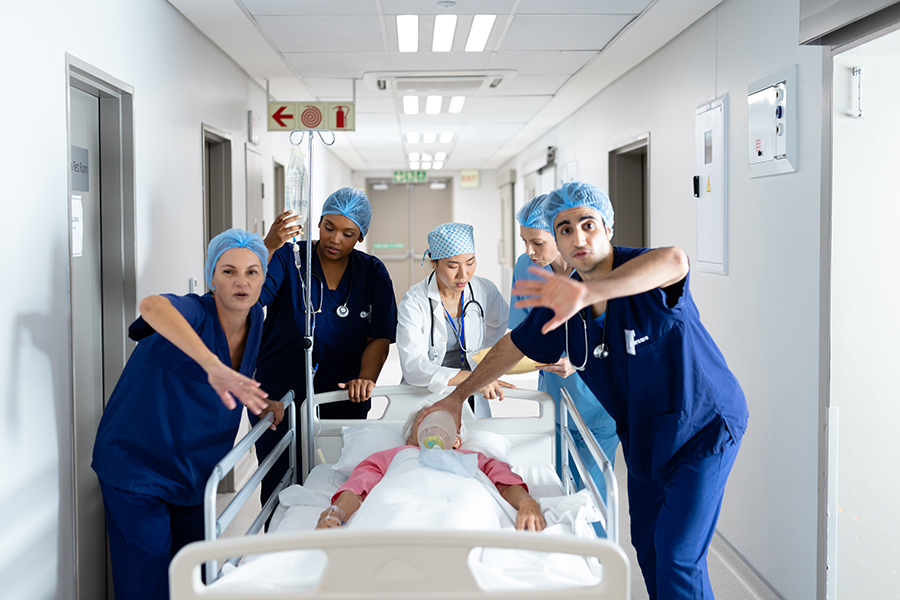
Health workers are all people engaged in work actions whose primary intent is to improve health, including doctors, nurses, midwives, public health professionals, laboratory technicians, health technicians, medical and non-medical technicians, personal care workers, community health workers, healers and traditional medicine practitioners. The term also includes health management and support workers such as cleaners, drivers, hospital administrators, district health managers and social workers, and other occupational groups in health-related activities as defined by the International Standard Classification of Occupations (ISCO-08).
Health workers are the backbone of any functioning health system. While contributing to the enjoyment of the right to health for all, health workers should also enjoy the right to healthy and safe working conditions to maintain their own health.
Health workers face a range of occupational risks associated with infections, unsafe patient handling, hazardous chemicals, radiation, heat and noise, psychosocial hazards, violence and harassment, injuries, inadequate provision of safe water, sanitation and hygiene.
The protection of health and safety of health workers should be part of the core business of the health sector: to protect and restore health without causing harm to patients and workers. Safeguarding the health, safety and well-being of health workers can prevent diseases and injuries caused by work, while improving the quality and safety of care, human resources for health and environmental sustainability in the health sector.


Health and Safety in a Hotel

The hospitality industry has the potential for multiple hazards, and hoteliers are constantly looking for ways to mitigate risks from various sources. Hoteliers are ethically and legally obliged to protect the health and safety of their guests and staff by creating effective protocols to protect their welfare.
Your hotel’s success is closely interlinked with the safety and health protocols you have put in place to protect your staff and guests.
A reputation of recurring multiple accidents can affect your employees’ turnover and reduce your guests’ bookings. As a hotelier, coming up with sustainable health and safety protocols to mitigate health and safety risks can mitigate your losses and protect people in the event of an accident.
Health and safety protocols are actionable steps hoteliers can use to protect staff and guests in the hotel. Health and safety protocols involve:
  • Documenting hazards in the hotel environment.
  • Communicating the potential hazards to all stakeholders.
  • Implementing training procedures to mitigate the risks.
  • Adapting an actionable plan for emergencies.

Health and Safety for Restaurants

Health and safety in a restaurant underpins almost everything. There is a lot going on in every venue at any given time. Restaurant health and safety starts with the kitchens, which are bustling places with hot surfaces and sharp instruments, restaurant floors are filled with trip hazards, and the food itself can pose a risk if not cooked properly. With so many elements involved, the chances of an accident happening are much higher than they might be in a quieter environment, like an office for example.
Identifying these risks and determining how they can be avoided or reduced is integral to the safe running and success of a restaurant. This is why restaurant health and safety policies exist, and why every establishment must complete a restaurant risk assessment.

Health and Safety in the Education System

Mainstreaming — or integrating — Occupational Safety and Health into education means including it systematically in classroom lessons. Ideally it becomes part of everyday life for pupils, parents and staff. If children start learning about safety and health as they learn to read and write, it becomes a natural part of how they work, play and live. They develop a good attitude to safety and health that will stay with them throughout their working lives.
OSH is best integrated into individual subjects rather than taught as a stand-alone topic. Activity-based learning and real-life examples will help bring the message home to children and young people. Key messages can be repeated in different ways for different age groups, whether in primary schools or vocational training colleges.
The whole-school approach is the ideal model. The integration of OSH into further education is more difficult and less well developed, particularly in universities. However, the same ‘whole-institute’ model applies. Networking and working in partnership with OSH authorities are key contributors to successful integration.

Health and Safety in Agriculture

Agriculture is one of the most hazardous industries. Hazards exist in many areas on the farm.
Employers are required to ensure the health, safety and welfare of workers. Adequate information, instruction, training and supervision is to be provided. Employers must ensure that safety clothing, equipment and devices are used and that systems are in place so that occupational hazards are recognized, evaluated and controlled. Policies, procedures, orientations, workplace inspections, hazard assessments and accident investigations all help reduce the risk of accidents and are a part of achieving due diligence for health and safety.

Health and Safety in Construction Industry

Construction industry, often termed as ‘high-risk’, has a significant impact on the health and safety of the workers. It is one of the most hazardous industries where occupational health and safety issues are a major concern. Though it is common to see a construction worker work at heights with equipment and building materials, these scenarios are plagued by potentially dangerous situations and poor working conditions. They are exposed to hazards that are difficult to quantify. These include falls, electrical shock, noise, vibration, and hazardous substances. Some of the common occupational health issues in the construction industry include musculoskeletal disorders, respiratory diseases, noise-induced hearing loss, and dermatitis.
These health issues can be prevented or minimized. For instance, workers can be provided with personal protective equipment, and regular health checks can be conducted to detect health issues early. As a result, it is essential to ensure the implementation of effective occupational health and safety measures in the construction industry.